
Volunteer Management Workflow for Small Nonprofits: Complete Food Bank Guide 2026
Discover how small food banks can build an effective volunteer management workflow to tackle unique challenges like food safety, scheduling, and training. This comprehensive guide offers practical strategies for recruitment, coordination, communication, and retention, helping small nonprofits streamline operations and boost volunteer engagement for sustainable community impact.
ShiftSharks Team
Volunteer Management Workflow for Small Nonprofits: A Complete Guide to Food Bank Success
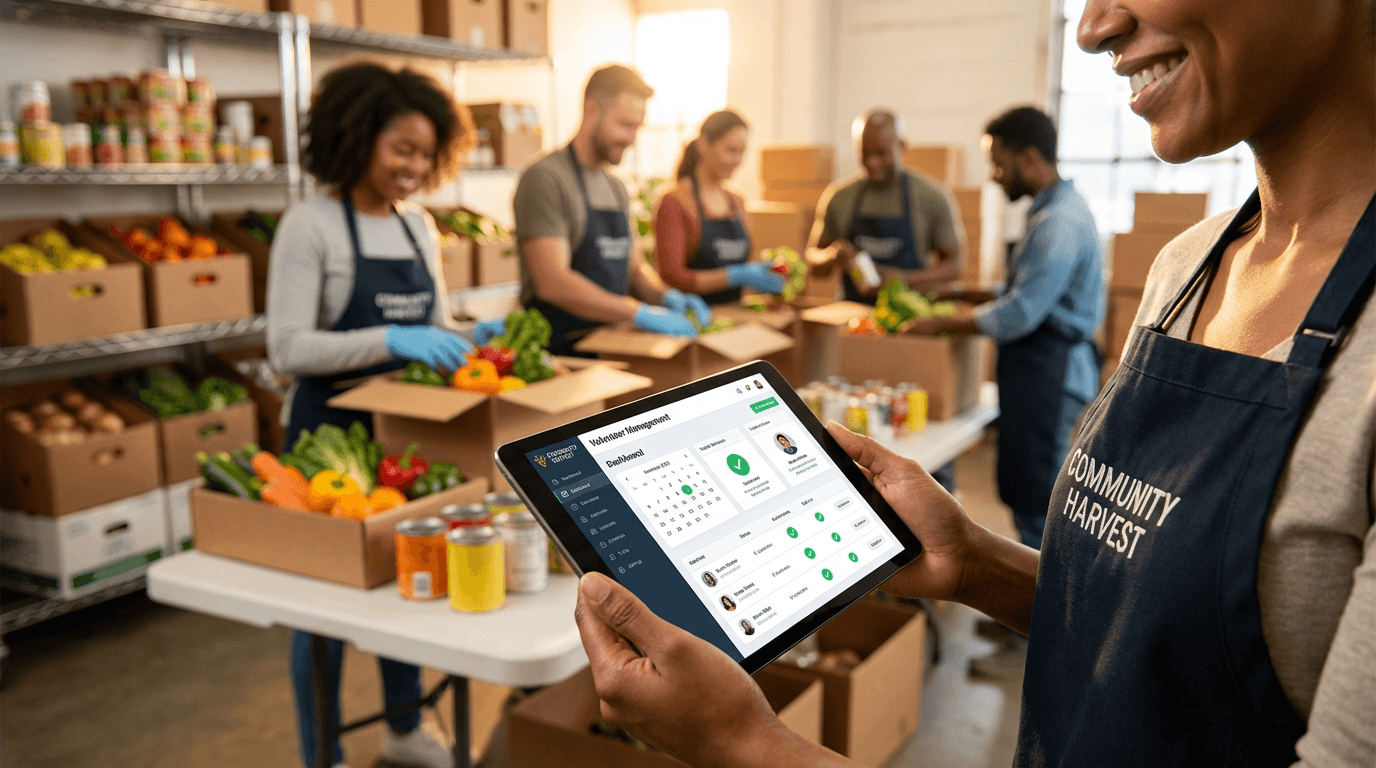
Picture this: It's 6 AM on a Saturday, and your food bank needs 15 volunteers to sort 2,000 pounds of donated groceries before the weekend distribution. But three people are no-shows, two others are confused about their roles, and you're frantically texting everyone while trying to manage the chaos. Sound familiar? You're not alone in this struggle.
Small nonprofits, especially food banks, face unique challenges when managing volunteers. Unlike large organizations with dedicated HR teams, you're often wearing multiple hats while trying to coordinate dozens of well-meaning people who want to help. The good news? A structured volunteer management workflow can transform your operations from chaotic scrambling into smooth, predictable success.
This guide will show you exactly how to build a volunteer management system that works for small nonprofits, with specific focus on food bank operations and proven communication templates that boost engagement and retention.
Why Small Nonprofits Need Structured Volunteer Workflows
The statistics tell a sobering story about volunteer management in America. According to the Corporation for National and Community Service, while 77.34 million Americans volunteer annually, nonprofit organizations struggle with a 43% annual volunteer turnover rate. For small food banks operating on shoestring budgets, losing nearly half your volunteers each year isn't just inconvenient - it's devastating.
Small nonprofits face particular challenges that make structured workflows essential. You're typically operating with 1-3 paid staff members who are responsible for everything from grant writing to direct service delivery. When volunteer coordination becomes another overwhelming task on top of your existing responsibilities, something has to give.
Food banks exemplify these challenges perfectly. You're dealing with food safety requirements, time-sensitive perishables, and the urgent need to serve families facing food insecurity. Unlike other nonprofits that might have flexible timing, food distribution often happens on strict schedules that can't be delayed because volunteers didn't show up or weren't properly trained.
A well-designed volunteer management workflow addresses these pain points by creating predictable, repeatable processes that reduce your administrative burden while improving volunteer satisfaction. When volunteers know what to expect and feel valued for their contributions, they stick around longer and bring their friends.
Essential Components of an Effective Volunteer Management Workflow
Building an effective volunteer management workflow for small nonprofits requires focusing on five core components that work together seamlessly. Each element supports the others, creating a system that becomes stronger and more efficient over time.
Recruitment and Onboarding
Your volunteer recruitment strategy needs to be both targeted and scalable. Start by conducting a staffing analysis to identify exactly what skills, certifications, and numbers you need for each shift or task. This seems obvious, but many small nonprofits skip this step and end up with too many people for simple tasks and not enough for specialized roles.
Leverage partnerships strategically rather than trying to recruit individual volunteers one by one. Connect with local schools, businesses, church groups, and community organizations that already have engaged members looking for meaningful ways to contribute. These group partnerships often provide more reliable volunteers than individual recruitment efforts.
Create a referral program where current volunteers can easily invite friends and family. Happy volunteers are your best recruiters because they can authentically share their positive experiences. Provide them with simple tools like email templates or social media graphics they can share with their networks.
Streamline your onboarding process to get volunteers from application to first shift as quickly as possible. Research shows that volunteers who wait more than two weeks between applying and their first assignment are 40% more likely to lose interest. Use online forms, digital training modules, and mentor assignments to accelerate this timeline.
Scheduling and Coordination
Manual scheduling using spreadsheets and email chains creates more problems than it solves. According to volunteer coordinators surveyed by Independent Sector, organizations using digital scheduling tools report 60% fewer no-shows and 35% better volunteer retention compared to those relying on manual methods.
Implement self-service scheduling where volunteers can view available shifts and sign up based on their availability and qualifications. This reduces your administrative workload while giving volunteers the flexibility they value. Define minimum and maximum volunteers per shift to ensure adequate coverage without overcrowding.
Build in automated reminder systems that send notifications 24-48 hours before shifts. Include specific information about arrival times, parking, what to bring, and who to contact with questions. The more prepared volunteers feel, the more confident and committed they'll be.
Create backup plans for no-shows and last-minute cancellations. Maintain a list of reliable volunteers who can fill in on short notice, and establish protocols for redistributing tasks when you're short-staffed. Effective volunteer scheduling requires planning for both ideal scenarios and inevitable disruptions.
Training and Skill Development
Food banks have specific training requirements that go beyond general volunteer orientation. Volunteers need to understand food safety protocols, proper lifting techniques, sorting procedures, and client interaction guidelines. Rushing through training to get volunteers started quickly often creates problems later.
Develop both online and in-person training components to accommodate different learning styles and schedules. Use Learning Management Systems (LMS) for flexibility, allowing volunteers to complete basic training modules at home before attending hands-on sessions. This hybrid approach maximizes retention while minimizing your time investment.
Create role-specific training tracks rather than generic orientation sessions. A volunteer sorting donated goods needs different skills than someone working directly with clients during distribution. Targeted training improves confidence and reduces errors during actual shifts.
Track completion of required training modules and certifications to ensure volunteers are qualified for their assigned roles. This is particularly important for food banks where improper food handling could create health risks or liability issues.
Communication Systems
Consistent, clear communication forms the backbone of successful volunteer management. Volunteers need to feel connected to your mission and informed about their specific contributions. Poor communication is cited as the primary reason volunteers leave organizations, according to research by the Points of Light Foundation.
Establish regular communication rhythms that keep volunteers engaged without overwhelming them. This might include monthly newsletters highlighting impact stories, weekly shift reminders, and immediate post-shift thank you messages. Consistency matters more than frequency.
Use personalized messaging based on volunteer interests, skills, and participation history. A CRM system designed for nonprofits can help you segment volunteers and send targeted communications that feel relevant rather than generic.
Share quantifiable impact regularly so volunteers understand how their time translates into meaningful outcomes. Instead of saying "thanks for volunteering," say "your four hours of sorting helped provide meals for 85 families this week." Specific numbers make the impact tangible and memorable.
Recognition and Retention
Recognition doesn't have to be expensive to be effective. Small gestures that acknowledge individual contributions often mean more than generic appreciation events. The key is making recognition timely, specific, and personal.
Implement both formal and informal recognition programs. Formal recognition might include annual volunteer appreciation events or service awards for long-term volunteers. Informal recognition happens in the moment - a handwritten thank you note, social media shoutout, or verbal acknowledgment during shifts.
Create advancement opportunities within your volunteer program. Experienced volunteers can become team leaders, mentors for new volunteers, or subject matter experts who help with training. These leadership roles provide growth opportunities that keep engaged volunteers connected to your organization.
Conduct exit interviews when volunteers leave to understand their experience and identify improvement opportunities. Sometimes volunteers leave for unavoidable reasons like moving or schedule changes, but often they leave because of preventable issues in your management processes.
Special Considerations for Food Bank Volunteer Management
Food banks face unique operational challenges that require specialized volunteer management approaches. Unlike other nonprofits, you're dealing with perishable inventory, food safety regulations, and urgent community needs that can't wait for perfect volunteer coordination.
Time sensitivity creates particular pressure in food bank operations. When a grocery store donation arrives unexpectedly, you need volunteers who can respond quickly to sort and process items before they spoil. This requires maintaining a pool of on-call volunteers and clear communication systems for urgent requests.
Food safety training becomes critically important in ways that don't apply to other nonprofit activities. Volunteers need to understand proper temperatures for different food types, expiration date protocols, and contamination prevention. Inadequate training doesn't just reduce efficiency - it could create health risks for the families you serve.
Physical demands of food bank work require careful volunteer matching and safety considerations. Lifting heavy boxes, standing for extended periods, and working in warehouse environments aren't suitable for all volunteers. Your workflow needs to account for physical limitations and provide meaningful roles for volunteers who can't handle the most physically demanding tasks.
Client interaction protocols require special attention in food bank settings. Volunteers need training on maintaining dignity and respect when serving families facing food insecurity. This includes understanding appropriate conversation topics, maintaining confidentiality, and recognizing signs of distress that should be referred to professional staff.
Communication Email Templates That Work
Effective email communication can dramatically improve your volunteer coordination while reducing administrative time. The key is creating templates that feel personal while standardizing your messaging for consistency and efficiency.
Recruitment Templates
Your recruitment emails need to clearly communicate the opportunity, requirements, and impact while making it easy for potential volunteers to take the next step. Here's a proven template structure:
Subject: Help Feed 500 Families This Saturday - Join Our Volunteer Team!
Hi [Name],
Your local food bank needs your help this Saturday to pack and distribute groceries for families facing food insecurity. In just 4 hours, you can help ensure 500 families have nutritious meals for the week.
What we need: 15 volunteers for food sorting and packing from 8 AM to 12 PM at [Address]. No experience required - we'll provide all training and materials.
Sign up here: [Registration Link]
Questions? Reply to this email or call [Phone Number].
Last month, volunteers like you helped distribute 45,000 pounds of food to 1,200 families. Your 4 hours can make a real difference in your community.
Thank you for considering this opportunity to serve,
[Your Name]
Volunteer Coordinator
This template works because it quantifies the impact, specifies exactly what's needed, and provides multiple ways for interested people to get more information or sign up.
Scheduling and Reminder Templates
Reminder emails reduce no-shows and help volunteers feel prepared and confident about their upcoming shifts. Send these 24-48 hours before scheduled volunteer time:
Subject: Ready for Tomorrow? Your Volunteer Shift Details Inside
Hi [Name],
Looking forward to seeing you tomorrow for your volunteer shift! Here's everything you need to know:
When: [Date] from [Start Time] to [End Time]
Where: [Address] - park in the back lot and enter through the volunteer entrance
What to bring: Comfortable shoes, water bottle, and a smile
Your role: [Specific assignment] - we'll provide additional details during check-in
Check-in starts 15 minutes before your shift at the volunteer desk. Look for [Staff Name] who will get you oriented and answer any questions.
Can't make it? Use this link to swap shifts: [Link] or call us at [Phone Number].
Thanks for your commitment to fighting hunger in our community!
[Your Name]
The specificity in this template reduces volunteer anxiety and the questions you'll receive, while the shift swap option helps maintain coverage when last-minute changes occur.
Post-Shift Recognition Templates
Immediate recognition after volunteer shifts reinforces positive experiences and encourages future participation. Send these within 24 hours of completed shifts:
Subject: Thank You, [Name] - You Made a Difference Today!
Hi [Name],
Thank you for volunteering with us today! Your hard work sorting and packing groceries directly helped [Specific Number] families access nutritious food this week.
Here's what your team accomplished today:
- Sorted 2,400 pounds of donations
- Packed 180 family grocery boxes
- Prepared meals for approximately 720 people
We're sharing your impact on our Facebook page - check it out and tag yourself if you'd like!
Interested in volunteering again? Here are upcoming opportunities that match your skills: [Link to future shifts]
Got feedback about today's experience? We'd love to hear it - just reply to this email.
You're helping transform lives in our community. Thank you for being part of the solution!
Gratefully,
[Your Name]
This template works because it provides specific impact numbers, offers easy next steps for continued engagement, and invites feedback that helps improve your volunteer program.
Common Challenges and Solutions
Small nonprofit volunteer management involves predictable challenges that can derail even well-intentioned programs. Recognizing these issues early and implementing systematic solutions prevents small problems from becoming major operational disruptions.
High volunteer turnover often stems from unclear expectations and poor communication rather than lack of commitment to your cause. When volunteers don't understand their roles or feel their contributions aren't valued, they naturally drift away. Solution: Create detailed role descriptions, provide thorough orientation, and implement regular check-ins during volunteers' first three months.
Seasonal fluctuations create staffing headaches, particularly for food banks that see increased demand during holidays when regular volunteers may be traveling. Build relationships with corporate volunteer programs that can provide group volunteers during peak periods, and cross-train your core volunteers to handle multiple roles when needed.
No-shows and last-minute cancellations disrupt operations and frustrate volunteers who do show up. Moving beyond text chains to structured communication systems with automated reminders and easy shift-swapping options significantly reduces this problem.
Administrative overload occurs when volunteer coordination consumes too much staff time, reducing your ability to focus on core mission activities. Implement self-service tools for volunteer registration, scheduling, and communication to reduce manual administrative tasks.
Tools and Technology for Small Nonprofits
The right technology can transform your volunteer management from a time-consuming burden into an efficient system that runs itself. However, small nonprofits need solutions that are affordable, easy to implement, and don't require dedicated IT support.
Volunteer management software designed for nonprofits offers features like online registration, automated scheduling, communication tools, and reporting capabilities. Many platforms offer free tiers or significant nonprofit discounts that make them accessible for organizations with limited budgets.
Look for platforms that integrate with your existing tools rather than requiring you to completely change your workflow. If you're already using Google Workspace or Microsoft 365, choose volunteer management tools that work within those ecosystems.
Consider the learning curve for both staff and volunteers when evaluating new tools. The most feature-rich platform won't help if your volunteers find it too complicated to use. Prioritize user-friendly interfaces and mobile compatibility since many volunteers prefer to sign up for shifts using their phones.
Modern volunteer scheduling software can automate many of the repetitive tasks that consume your time, from sending reminder emails to generating attendance reports. This automation frees up your time to focus on volunteer engagement and program improvement.
Start simple with basic features and expand functionality as your volunteer program grows. Many organizations make the mistake of implementing complex systems before their processes are well-defined, creating confusion rather than efficiency.
Building Long-Term Success
Sustainable volunteer management requires thinking beyond immediate staffing needs to build systems that support long-term organizational growth. This means creating processes that can scale as your nonprofit expands and developing volunteer leaders who can help manage the program.
Document your procedures so that volunteer management knowledge doesn't depend entirely on one person. When key staff members leave or take vacations, your volunteer program should continue operating smoothly. Create written procedures for common tasks like new volunteer orientation, shift scheduling, and emergency coverage.
Develop metrics to track volunteer program health beyond just the number of people who show up. Monitor retention rates, volunteer satisfaction scores, time from application to first shift, and cost per volunteer hour. These metrics help you identify trends and make data-driven improvements.
Foster a volunteer community rather than just coordinating individual contributors. Encourage relationships between volunteers through team-building activities, informal social events, and peer mentoring programs. Volunteers who feel connected to each other stay engaged longer than those who only interact with staff.
Plan for succession by identifying and developing volunteer leaders who can take on coordination responsibilities. Experienced volunteers often make excellent mentors for newcomers and can help with training, scheduling, and problem-solving. This distributed leadership model reduces your workload while creating advancement opportunities that keep engaged volunteers involved.
FAQ: Volunteer Management for Small Nonprofits
How many volunteers should a small food bank recruit?
Most small food banks need 20-40 active volunteers to maintain consistent operations, with about 60% participating regularly and 40% serving as backup for peak periods or emergencies. Start by analyzing your core activities and calculating volunteer hours needed per week, then recruit 25% more than your minimum to account for schedule conflicts and turnover.
What's the most efficient way to train food bank volunteers?
Combine online modules for basic food safety and organizational information with hands-on training during slower operational periods. New volunteers should shadow experienced team members for their first 2-3 shifts while gradually taking on more responsibility. This approach reduces your training time while ensuring volunteers feel confident and prepared.
How can small nonprofits afford volunteer management software?
Many volunteer management platforms offer free tiers for small organizations or significant nonprofit discounts. Start with basic features and upgrade as your program grows. The time savings from automation typically pays for software costs within the first few months of implementation.
What should I do about volunteers who don't show up consistently?
Have a direct conversation with inconsistent volunteers to understand barriers and explore solutions. Sometimes scheduling conflicts or transportation issues can be resolved. If volunteers continue to be unreliable after discussing expectations, it's better to focus your energy on volunteers who are committed to consistent participation.
How do I handle volunteers who want to help but aren't suitable for food bank work?
Create alternative roles that match their abilities and interests, such as administrative support, social media assistance, or fundraising help. If no suitable roles exist within your organization, help connect them with other nonprofits where they can make meaningful contributions. This approach maintains goodwill while protecting your operational efficiency.
Transform Your Volunteer Management Today
Building an effective volunteer management workflow for your small nonprofit doesn't happen overnight, but the steps outlined in this guide provide a roadmap for sustainable success. Start with the area that's causing you the most frustration right now, whether that's recruitment, scheduling, or communication.
Remember that effective volunteer management is an investment in your organization's long-term sustainability. Every hour you spend improving your systems will save multiple hours of future administrative work while creating better experiences for the volunteers who make your mission possible.
Your community needs the services your food bank provides, and reliable volunteers are essential for meeting that need. By implementing structured workflows, clear communication, and appropriate technology, you can build a volunteer program that supports your mission while reducing stress on your staff.
Ready to streamline your volunteer coordination? Start by documenting your current process, identifying the biggest pain points, and implementing one improvement this week. Small changes compound over time to create dramatic improvements in efficiency and volunteer satisfaction.