
Why Text Chains Don't Work for Volunteer Coordination: Food Bank Solutions 2026
Struggling with chaotic volunteer coordination at your food bank using text chains? Discover why this outdated method fails, causing burnout and communication overload, and learn how to build an automated volunteer system that runs itself. This guide is essential for food bank coordinators seeking to improve volunteer scheduling, retention, and operational efficiency with modern management solutions.
ShiftSharks Team
Why Text Chains Don't Work for Volunteer Coordination: The Food Bank Crisis You Need to Fix
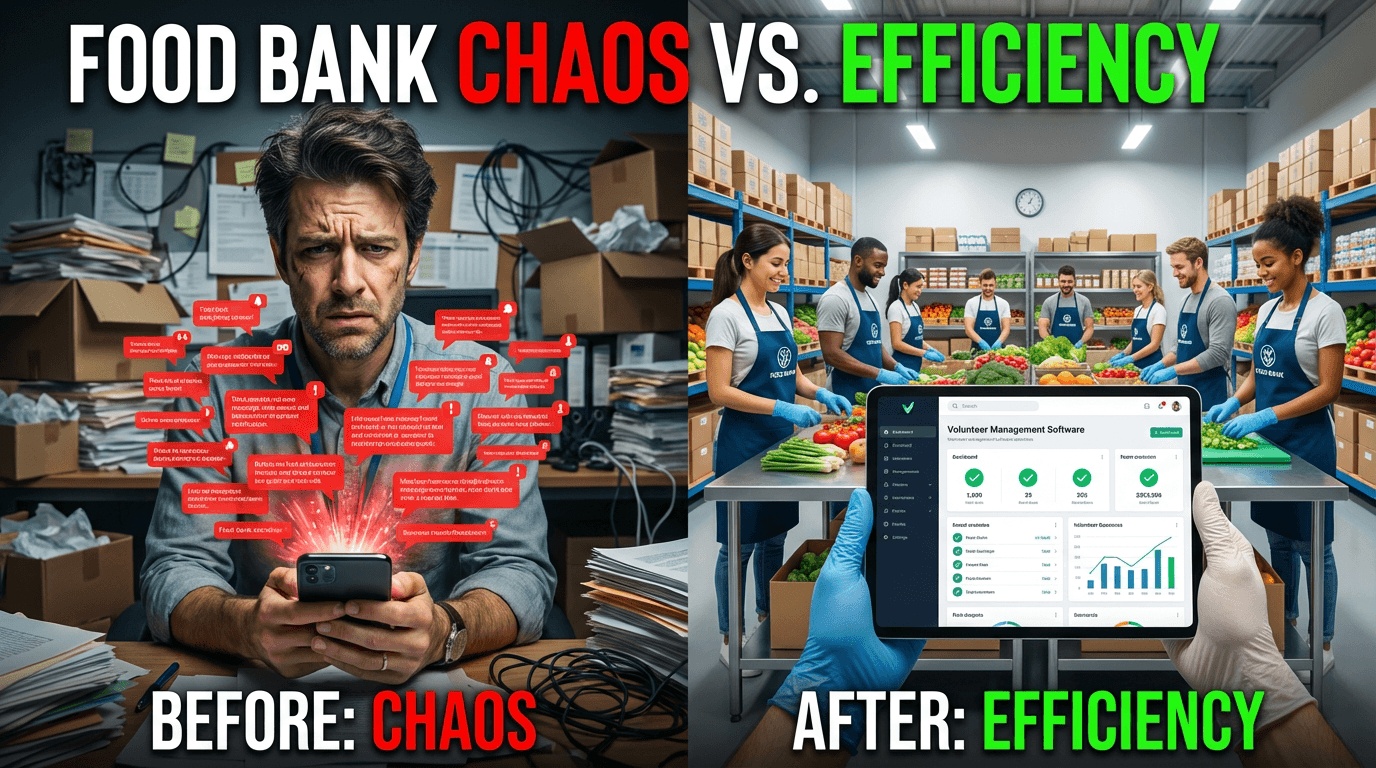
It's 6:47 AM and Sarah's phone is already buzzing with 23 unread messages from the food bank volunteer group chat. Someone can't make their shift, another volunteer is asking what time they're supposed to arrive (for the third time this week), and two people are having a heated discussion about who was supposed to bring the hand sanitizer. Sound familiar? If you're managing food bank volunteers through text chains, you're not alone in this chaos, but you're definitely making things harder than they need to be.
Text chains have become the default communication method for many volunteer coordinators, but they're actually sabotaging your food bank's effectiveness. The constant ping of notifications, scattered information, and manual coordination processes are burning out both coordinators and volunteers faster than you can recruit new ones. Let's dive into why this approach fails and what you can do to build a volunteer system that actually runs itself.
The Hidden Costs of Text Chain Volunteer Management
When you rely on group messaging to coordinate food bank volunteers, you're essentially trying to run a complex operation with tools designed for casual conversation. The result? A communication nightmare that costs your organization time, money, and volunteer retention.
Research shows that coordinators using text chains spend over 20 hours per month on manual scheduling tasks that could be automated. That's half a work week dedicated to sending messages, tracking responses, and filling gaps in coverage. Meanwhile, your volunteers are dealing with notification fatigue, receiving dozens of messages daily that interrupt their work and personal life.
Message Overload Kills Productivity
The average food bank volunteer group chat generates 150+ messages per week. Each notification pulls coordinators away from their core mission of fighting food insecurity. Instead of focusing on client services and community outreach, they're constantly managing a digital flood of questions, confirmations, and last-minute changes.
Volunteers fare even worse. They join your food bank to help their community, not to wade through endless text threads trying to figure out their next shift. When messages pile up faster than they can read them, important information gets buried, leading to confusion and frustration.
Why Food Banks Can't Afford Communication Chaos
Food banks operate under unique pressures that make communication failures particularly damaging. Unlike other volunteer organizations, food banks deal with perishable inventory, strict health regulations, and vulnerable populations who depend on consistent service. When your volunteer coordination breaks down, the ripple effects hit your entire community.
The Perishable Problem
Food banks can't afford volunteer no-shows the way other organizations might. When volunteers don't appear for sorting shifts, fresh produce sits unprocessed. When distribution volunteers ghost their shifts, clients who've already made the difficult decision to seek help are turned away. These aren't just scheduling inconveniences; they're missed opportunities to feed families.
Text chain coordination makes this problem worse by creating information silos. Availability, skills, and scheduling details scatter across multiple conversation threads. Coordinators lose track of who confirmed which shifts, leading to either overstaffing (wasted resources) or understaffing (operational failures).
Skills Matching Matters More Than You Think
Not every volunteer can handle every task at a food bank. You need people with food handling experience for kitchen work, bilingual volunteers for client services, and physically capable individuals for warehouse operations. Text chains make it nearly impossible to match volunteers' skills with appropriate roles.
Without a centralized system tracking volunteer qualifications, coordinators resort to asking the same questions repeatedly: "Who has food safety certification?" "Does anyone speak Spanish?" "Can someone lift 50-pound boxes?" This inefficiency leads to mismatched assignments, frustrated volunteers, and operational bottlenecks.
The Real Cost of Poor Volunteer Communication
Beyond the immediate operational challenges, text chain management creates long-term problems that compound over time. High turnover, constant retraining, and coordinator burnout create a vicious cycle that undermines your food bank's mission.
Volunteer Turnover Crisis
Food banks already face higher volunteer turnover rates than most nonprofit organizations. The combination of physically demanding work, emotional weight of serving vulnerable populations, and poor communication systems pushes this turnover even higher. When volunteers feel unsupported by chaotic coordination, they simply stop showing up.
The Compass Food Bank discovered this firsthand. Before implementing volunteer scheduling software, they were losing 40% of new volunteers within their first month. The primary reason? Communication confusion and lack of clear role expectations.
The Training Treadmill
Every volunteer who leaves takes their training investment with them. Food banks must maintain rigorous standards for food safety, client dignity, and operational procedures. When poor communication drives away experienced volunteers, coordinators get stuck in an endless cycle of basic training sessions instead of building advanced capabilities.
This training treadmill exhausts coordinators and limits program growth. Instead of expanding services or improving efficiency, teams spend their energy repeatedly covering the same ground with new volunteers who may not stick around long enough to become truly effective.
Building Volunteer Systems That Actually Work
The solution isn't to communicate more through text chains; it's to communicate better through purpose-built systems. Modern volunteer management platforms address the specific challenges food banks face while creating the foundation for scalable, sustainable operations.
Centralized Information Hub
Effective volunteer coordination starts with a single source of truth. Instead of searching through dozens of text messages to find someone's availability, coordinators need a centralized dashboard showing real-time volunteer status, skills, and scheduling preferences.
This centralization eliminates the information scavenger hunts that plague text chain systems. Coordinators can instantly see who's available, what skills they bring, and how their schedule aligns with organizational needs. Volunteers benefit too, accessing their assignments, requirements, and updates in one easy-to-find location.
Automated Scheduling Magic
The best volunteer management systems don't just store information; they actively optimize assignments. AI-powered platforms consider volunteer skills, availability, past participation, and preferences to suggest optimal shift assignments automatically.
For food banks, this automation is particularly valuable. The system might prioritize experienced volunteers for complex tasks like client intake while suggesting newer volunteers for supportive roles like stocking shelves. These smart assignments improve operational efficiency while providing appropriate challenge levels for volunteers at different experience stages.
Implementation Strategy: From Chaos to Clarity
Transitioning from text chain chaos to automated coordination requires a strategic approach. The most successful food banks follow a phased implementation that gradually shifts responsibility from coordinators to self-managing systems.
Phase 1: Assessment and Setup
Start by auditing your current volunteer needs and constraints. How many volunteers do you coordinate weekly? What skills are essential for different roles? When do you experience the highest turnover? This baseline assessment helps you configure any new system to match your specific operational requirements.
Document your volunteer roles with clear skill requirements and time commitments. This documentation becomes the foundation for automated matching algorithms. The more specific you are about role requirements, the better the system can suggest appropriate assignments.
Phase 2: Volunteer Database Migration
Most food banks underestimate the value of their existing volunteer relationships. When migrating from text chains to comprehensive volunteer management systems, take time to properly capture volunteer skills, preferences, and history.
This migration process often reveals gaps in your volunteer knowledge. You might discover that several volunteers have relevant professional experience you never knew about, or that scheduling conflicts you attributed to lack of commitment actually reflect real availability constraints.
Phase 3: Self-Service Implementation
The ultimate goal is creating a system where volunteers manage their own participation with minimal coordinator intervention. Self-service scheduling, automated reminders, and role-based access control shift administrative burden from coordinators to the system itself.
Start small with one program or volunteer team, then expand as both coordinators and volunteers become comfortable with the new approach. Success breeds adoption; when volunteers see how much easier scheduling becomes, they'll actively encourage the transition.
Measuring Success: Beyond Just Filling Shifts
Effective volunteer coordination systems provide metrics that go beyond simple attendance tracking. Modern platforms offer insights into volunteer engagement, skill development, and operational efficiency that help food banks optimize their human resources.
Engagement Analytics
Track not just who shows up, but how engaged they are during shifts. Systems can monitor volunteer progression from new recruits to experienced team members, identifying patterns that predict long-term retention. This data helps coordinators intervene early when volunteers show signs of disengagement.
For food banks, engagement analytics are particularly valuable because they reveal which roles and schedules work best for volunteer retention. You might discover that morning shifts have higher satisfaction rates, or that volunteers who start with client-facing roles are more likely to become long-term contributors.
Operational Efficiency Gains
The best volunteer management systems provide clear ROI through time savings and improved operations. Coordinators should track metrics like time spent on scheduling, volunteer utilization rates, and no-show frequencies to measure the impact of system improvements.
These metrics often reveal surprising insights. One food bank discovered that their most reliable volunteers were also their most underutilized, leading to a reassignment strategy that improved both volunteer satisfaction and operational capacity.
Future-Proofing Your Volunteer Program
As food banks face growing demand and evolving volunteer expectations, coordination systems must be flexible enough to adapt. The platforms that serve food banks best are those designed for scalability and integration with other nonprofit tools.
Integration Capabilities
Modern volunteer management doesn't exist in isolation. The most effective systems integrate with donor management platforms, inventory systems, and communication tools to create a comprehensive operational overview.
For food banks, this integration is crucial. Volunteer scheduling should coordinate with inventory management to ensure adequate staffing during large donation deliveries. Client service schedules should align with food distribution patterns to optimize resource allocation.
Scalability Planning
The system that works for 50 volunteers may not handle 500 effectively. Choose platforms designed for growth, with features that activate as your program expands. This scalability planning prevents the need for disruptive system changes as your food bank's impact grows.
Consider both volunteer quantity and program complexity in your scalability planning. As food banks expand services beyond basic distribution into programs like mobile pantries, cooking classes, or nutrition education, volunteer coordination must evolve to support these diverse initiatives.
Frequently Asked Questions
How quickly can we transition from text chains to automated scheduling?
Most food banks complete the transition within 4-6 weeks. The key is phased implementation starting with one volunteer team or program, then expanding as both coordinators and volunteers adapt to the new system. Rushing the transition often creates resistance, while gradual adoption builds confidence and buy-in.
What if volunteers prefer text communication?
Modern volunteer management systems include text messaging features that send targeted, relevant updates without the chaos of group chats. Volunteers receive only the information they need for their specific roles and schedules, reducing message fatigue while maintaining their preferred communication method.
How much time does automated scheduling actually save coordinators?
Food banks typically reduce scheduling-related administrative time by 15-25 hours per month after implementing automated systems. This time savings comes from eliminating repetitive tasks like availability polling, manual shift assignments, and constant schedule adjustments.
Can volunteer management software handle complex food bank requirements like certifications and physical capabilities?
Yes, modern platforms are designed specifically for organizations with complex volunteer requirements. They can track certifications, physical capabilities, language skills, and availability constraints while automatically suggesting appropriate role assignments based on these qualifications.
What's the typical cost savings from better volunteer coordination?
Beyond coordinator time savings, food banks see reduced costs from lower volunteer turnover (less training), improved operational efficiency (better resource utilization), and increased volunteer productivity (better skill matching). Most organizations report ROI within 3-6 months of implementation.
Take Action: Your Food Bank Deserves Better
Text chains aren't just inefficient; they're actively undermining your food bank's mission. Every minute spent managing communication chaos is time stolen from fighting food insecurity in your community. Every volunteer lost to poor coordination represents missed opportunities to expand your impact.
The solution exists, and it's more accessible than ever. Modern volunteer management platforms are designed specifically for organizations like yours, with features that address the unique challenges food banks face. The question isn't whether you can afford to implement better systems; it's whether you can afford not to.
Ready to transform your volunteer coordination from chaotic to streamlined? Explore volunteer management best practices from the National Food Bank Association, or learn more about effective volunteer engagement strategies from Feeding America. Your volunteers, your staff, and your community are counting on you to make this change.